


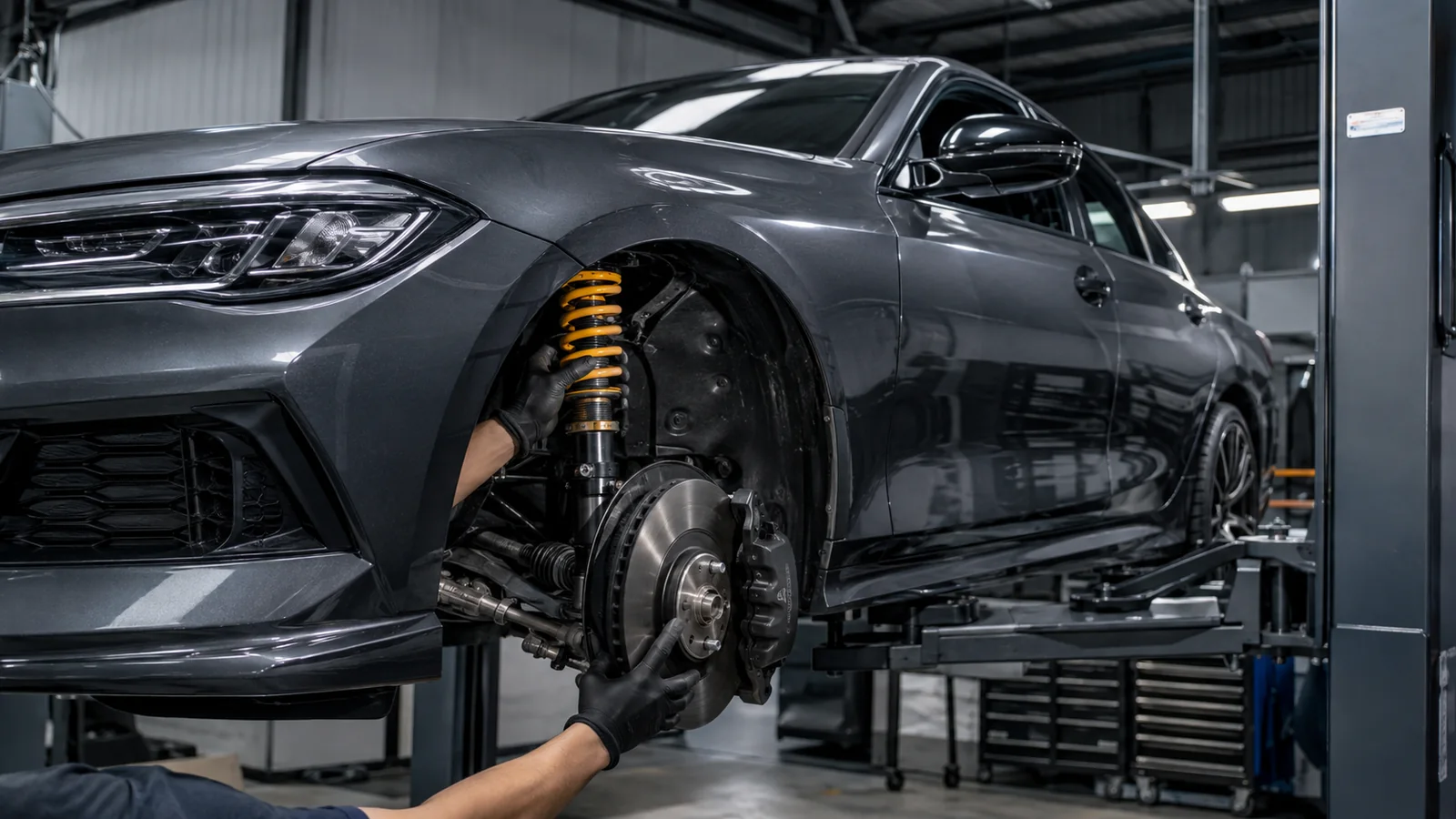
A street performance coilover needs to balance two objectives that do not always point in the same direction: improved chassis control and everyday road usability.
Lowering the vehicle or increasing spring stiffness alone does not create a well-balanced suspension package. Spring rates, damper characteristics, available suspension travel, bump-stop behavior, ride height, tyre specification and vehicle fitment all interact with one another.
For vehicle-specific street performance applications, ROOVA approaches coilover development as a complete suspension system rather than a collection of individual components.
The following application scenario illustrates the key decisions involved in developing a coilover package for customers seeking sharper road performance without turning the vehicle into a track-only setup.
The Challenge: Performance Without a Race-Only Compromise
Consider a typical performance vehicle application where the customer wants improved body control, more direct response and a lower stance while retaining practical everyday usability.
The objective is not simply to make the suspension as stiff or as low as possible.
Instead, the coilover package needs to balance:
- Reduced body movement during braking, acceleration and cornering
- Predictable steering and chassis response
- Practical ride quality on normal roads
- Sufficient usable suspension travel
- A functional ride-height adjustment range
- Wheel and tyre clearance
- Consistent vehicle-specific fitment
- Adjustment that is useful for the intended application
These requirements create a series of connected engineering decisions.
A change to spring rate can influence the required damper characteristics. Lowering the vehicle can reduce available wheel travel. Changing tyre or wheel specifications can affect clearance. A bump stop can also become part of the effective suspension behavior as the available travel is reduced.
For this reason, the complete package needs to be considered before the final specification is defined.
Vehicle and Use-Case Inputs
Street performance coilover development begins with understanding the vehicle and how the customer intends to use it.
Depending on the project, relevant inputs may include:
- Vehicle make, model and generation
- Front and rear vehicle load information
- Suspension layout and mounting configuration
- Target ride height
- Required ride-height adjustment range
- Wheel and tyre specifications
- Available suspension travel
- Typical road environment
- Daily-driving, touring or spirited-road priorities
- Desired handling characteristics
- Installation and service requirements
These inputs establish the working envelope for spring selection, damper characteristics, ride-height planning and suspension travel.
The objective is to develop the suspension around the intended application rather than apply the same setup logic to different vehicle platforms.
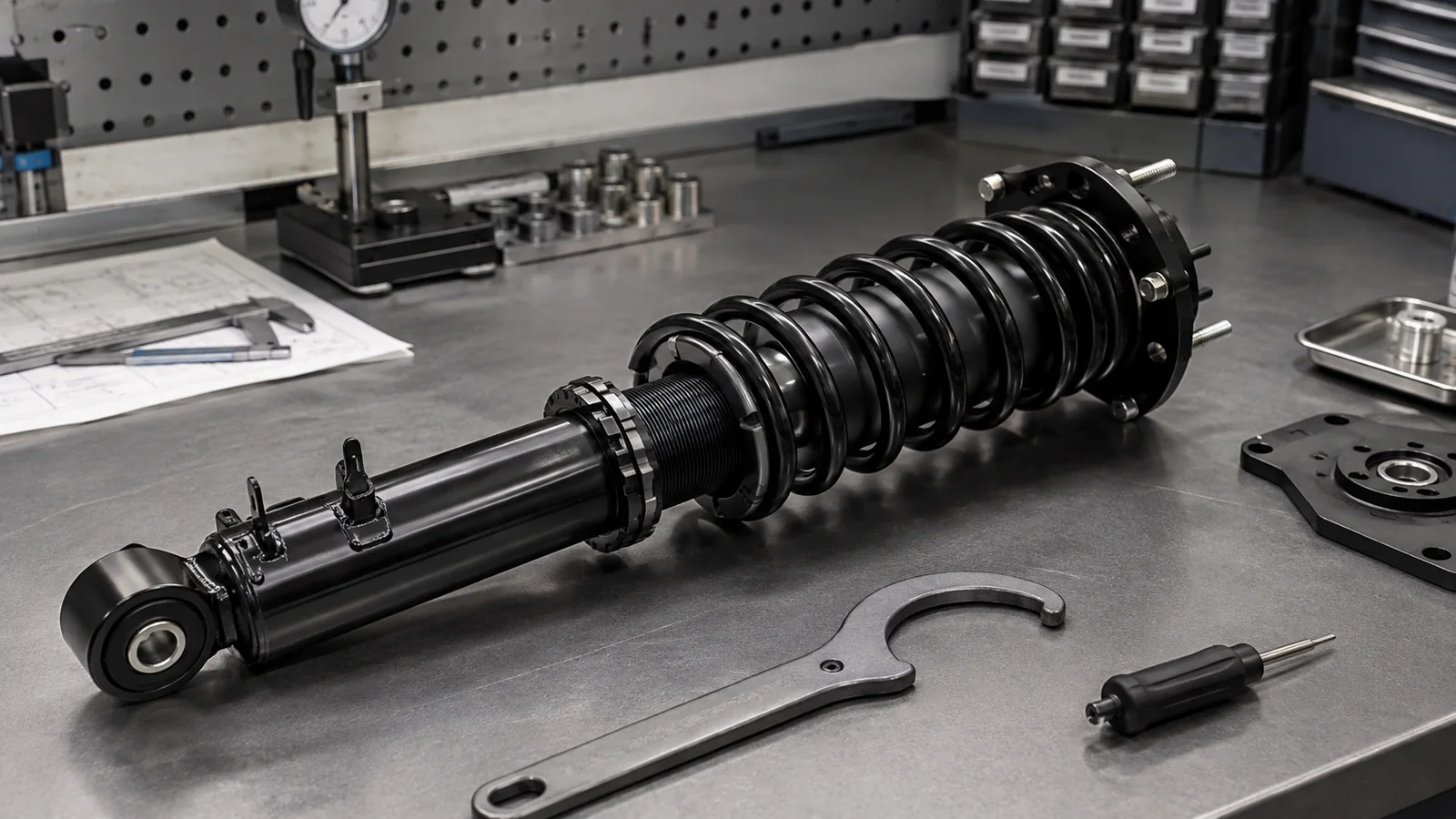
Engineering a Street Performance Coilover as a Complete System
Spring rate, damping, ride height and available suspension travel are closely connected.
Optimizing one parameter without considering the others can produce a suspension package that looks appropriate on paper but does not behave as intended on the road.
ROOVA therefore reviews these elements as parts of the same street performance suspension system.
Spring Rate: Control vs. Compliance
A common assumption is that a performance coilover should simply use a stiffer spring.
In practice, spring-rate selection involves a trade-off.
A spring needs to provide sufficient support for the vehicle and intended chassis behavior, but excessive stiffness can reduce compliance over uneven road surfaces and may not compensate for an unsuitable damper or insufficient suspension travel.
For a street-focused application, the objective is therefore not maximum spring stiffness.
The spring configuration should be considered alongside:
- Vehicle load distribution
- Suspension geometry
- Intended ride height
- Available wheel travel
- Damper characteristics
- Tyre specification
- Desired handling balance
- Expected road conditions
This creates a more useful starting point for a street performance setup than selecting spring rates based on stiffness alone.
Damper Adjustment: More Clicks Do Not Automatically Mean Better Control
Adjustable dampers are often marketed by the number of available adjustment positions.
However, adjustment count alone does not determine whether the damper provides useful tuning.
For a street performance coilover, the more important question is whether the usable adjustment range provides meaningful changes that remain appropriate for the selected spring configuration and intended road conditions.
A softer setting may be useful for rougher roads or daily driving, while a firmer setting may provide additional chassis control for smoother roads or more performance-oriented driving.
The objective is to create a usable tuning window rather than simply maximize the number of adjustment positions.
This is why ROOVA treats damper adjustment as part of the overall suspension specification rather than as a standalone marketing feature.

Ride Height vs. Suspension Travel
Ride height is another area where appearance and suspension function can conflict.
Customers often want a lower stance, but reducing ride height can also reduce the amount of suspension travel available before the suspension reaches its compression limit or engages the bump stop.
If the vehicle is lowered without considering available travel, the suspension may have less room to absorb larger road inputs.
For this reason, the lowest physically achievable setting is not necessarily the recommended street setting.
During development, the intended ride-height range should be considered together with:
- Available compression travel
- Bump-stop engagement
- Wheel and tyre clearance
- Suspension geometry
- Ground clearance
- Vehicle usage
- Road conditions
The objective is a usable ride-height range that allows customers to achieve the desired stance while maintaining appropriate suspension operation for the intended application.
Bump Stops Are Part of the Suspension System
Bump stops are sometimes treated only as protection against suspension bottoming.
In a performance suspension system, their role can be more important.
As the suspension approaches the end of its available compression travel, bump-stop engagement can influence how progressively the suspension responds to additional load.
This becomes particularly relevant when a vehicle is lowered and available travel is reduced.
A street performance coilover therefore needs to consider not only whether a bump stop is present, but how its engagement relates to ride height, suspension travel and the intended behavior of the complete package.
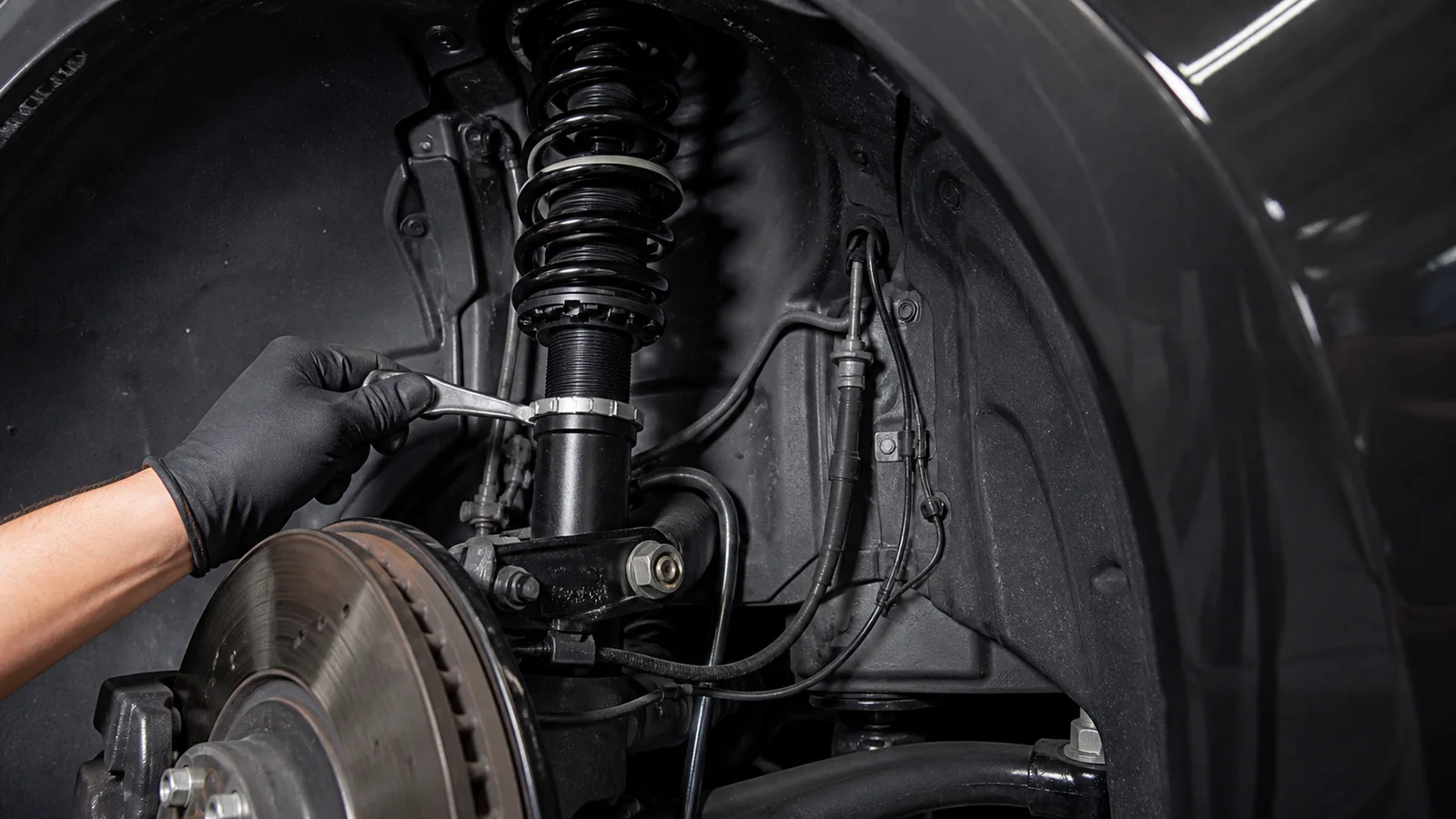
Vehicle Fitment Beyond the Mounting Points
Correct coilover fitment involves more than matching the upper and lower mounting points.
A vehicle-specific fitment review may also consider:
- Suspension mounting configuration
- Brake-line and ABS-sensor routing
- Wheel and tyre clearance
- Spring and adjustment-collar clearance
- Adjustment accessibility
- Relevant suspension geometry
- Installation orientation
- Required hardware
- Service access
These details influence whether the finished product can be installed, adjusted and supported consistently.
For distributors, workshops and private-label suspension programs, this is particularly important because installation consistency can directly affect technical support and the end-customer experience.
A Typical Street Performance Setup Decision
Consider a customer who wants a visibly lower ride height and sharper response for spirited road driving.
It may be tempting to respond by specifying a significantly stiffer spring and maximizing the available lowering range.
A more balanced development process asks different questions.
How much suspension travel remains at the intended ride height?
When does the bump stop begin to influence suspension behavior?
Is the damper operating within a useful range with the selected spring?
Does the wheel and tyre package maintain the required clearance throughout suspension movement?
Will the setup remain practical on the type of roads the customer actually uses?
These questions can lead to a different product decision: rather than pursuing the lowest ride height or highest spring rate, the specification may prioritize a more moderate lowering range, sufficient usable travel and a damper configuration matched to the intended street-performance character.
That trade-off is central to developing a street performance coilover rather than a race-only suspension package.
Prototype and Fitment Review
Once the proposed suspension specification has been defined, a prototype or pre-production package can be reviewed against the project requirements.
Depending on the program, the review process may include:
- Vehicle-platform fitment confirmation
- Mounting-point verification
- Ride-height adjustment review
- Suspension-travel assessment
- Wheel and tyre clearance review
- Spring and adjustment-collar clearance
- Brake-line and sensor routing
- Adjustment accessibility
- Damper characteristic or dynamometer data review, where applicable
- Installation documentation
- Road-use evaluation, where included in the project scope
The purpose of this stage is to identify conflicts before the specification moves into repeat production.
For example, a target ride height may provide the desired appearance but leave insufficient usable compression travel for the intended road environment.
Instead of accepting the lowest setting as the recommended setup, the ride-height specification can be reviewed together with spring configuration, bump-stop engagement and damper operation.
Likewise, an adjustment collar or spring assembly may fit correctly at static ride height but require additional clearance review through the expected range of suspension movement.
These are the types of practical decisions that turn a collection of suspension components into a vehicle-specific coilover package.
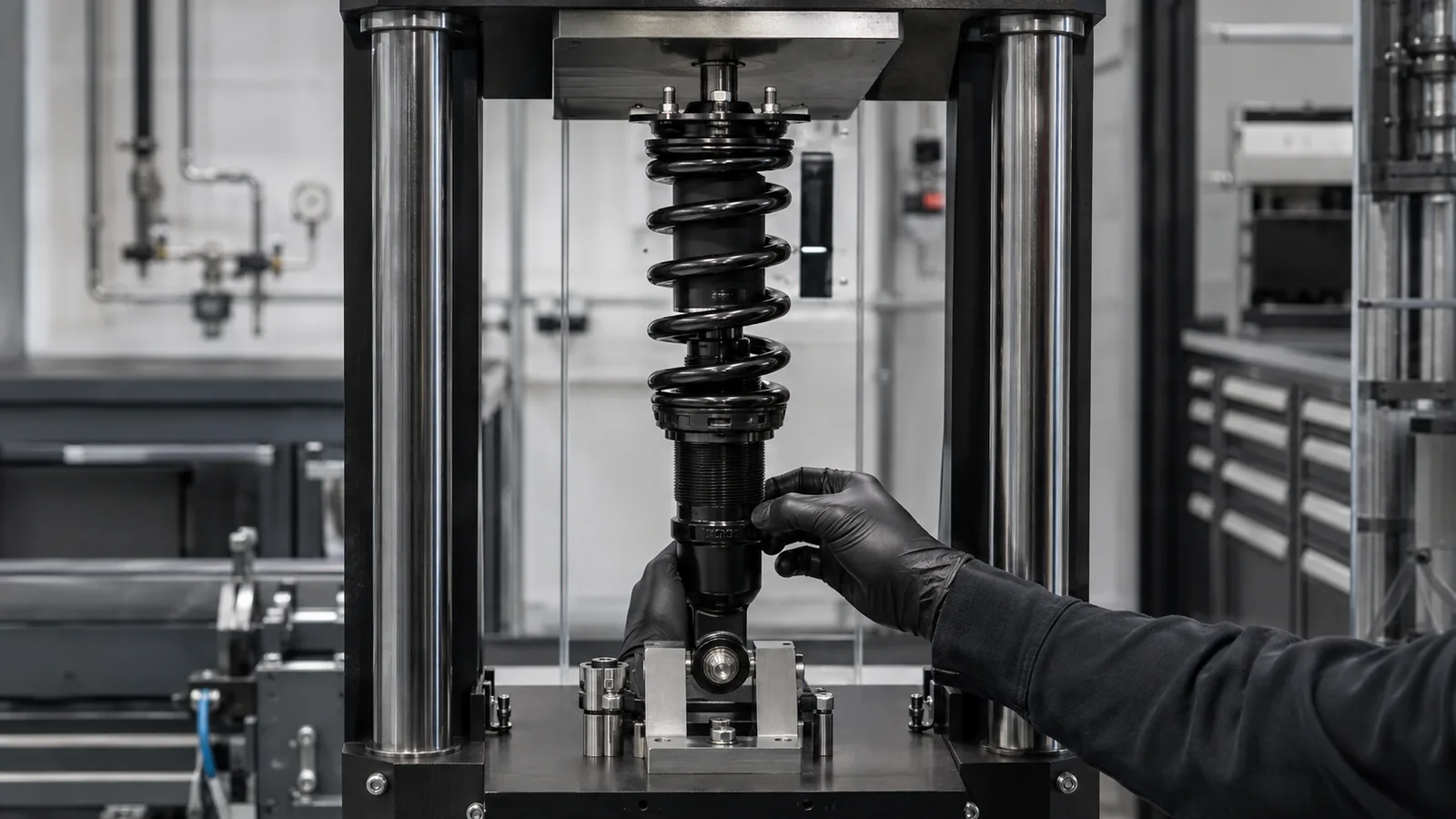
From Development Requirements to Production Specification
Following engineering and fitment review, the production specification defines the parameters required to manufacture and support the coilover package consistently.
Depending on the project, this may include:
| Parameter | Production Definition |
|---|---|
| Vehicle application | Make, model and generation |
| Suspension configuration | Vehicle-specific |
| Front spring specification | Defined for project requirements |
| Rear spring specification | Defined for project requirements |
| Damper specification | Application-specific configuration |
| Adjustment range | Defined according to product design |
| Ride-height range | Vehicle-specific |
| Bump-stop configuration | Defined for suspension package |
| Mounting hardware | Application-specific |
| Installation requirements | Documented for target platform |
| Finish and identification | Customer/project specification |
| Quality requirements | Defined inspection criteria |
This provides a controlled reference for production, installation documentation and distributor support.
Building a Street Performance Coilover Package
A successful street performance coilover should not be defined by a single specification such as spring stiffness, damper adjustment count or maximum lowering capability.
The complete package needs to balance:
- Chassis control
- Road compliance
- Spring configuration
- Damper characteristics
- Suspension travel
- Bump-stop behavior
- Ride-height adjustment
- Vehicle fitment
- Wheel and tyre clearance
- Installation requirements
For ROOVA, the objective is to develop these elements around the intended vehicle and use case so that the resulting specification has a clear relationship between performance objectives, practical road use and production requirements.
Develop a Coilover Package for Your Vehicle Application
ROOVA supports distributors, tuning brands and private-label suspension programs developing coilover products for specific vehicle platforms and market requirements.
To begin a street performance coilover project, customers can provide:
- Vehicle make, model and generation
- Target market and intended use
- Desired ride-height range
- Wheel and tyre information
- Suspension or OE reference information
- Desired handling and comfort priorities
- Adjustment requirements
- Product positioning and branding requirements
ROOVA can then review the application requirements and develop the proposed suspension specification around vehicle fitment, ride-height objectives, spring and damper configuration, manufacturing requirements and product positioning.
Related Suspension Solutions
Street Performance Coilovers
Vehicle-specific adjustable suspension packages developed for road-focused performance applications.
Track-Focused Coilover Systems
Suspension solutions for customers requiring a more performance-oriented balance of chassis control, adjustment and vehicle setup.
Private-Label Coilover Development
Custom suspension development and manufacturing support for distributors, tuning brands and aftermarket product programs.
