


Why Wheel and Suspension Fitment Are Becoming More Connected
Wheel fitment cannot be separated from ride height, suspension clearance, alignment and tire dimensions. Modern builds increasingly treat them as one system.
Wheel fitment is often reduced to a short list of specifications: diameter, width, bolt pattern and offset. Those measurements are essential, but they describe only part of what happens when a wheel is installed on a vehicle. The wheel operates inside a moving system that includes the tire, brakes, suspension and bodywork.
Suspension is one of the biggest reasons fitment should be treated dynamically. Lowering a vehicle reduces the relationship between the tire and body and can change alignment angles. A lifted or leveled truck can create additional space in some areas while still having limitations during steering or suspension compression. Adjustable suspension adds another variable because the final ride height may differ from the original setup.
Wheel offset and width influence both sides of the available space. Moving the wheel outward can affect fender clearance, while moving it inward can reduce clearance to struts, control arms or other suspension components. Tire dimensions add further complexity because the tire is usually wider than the wheel and changes shape under load.
Alignment matters as well. Camber and toe determine how the wheel and tire sit and move relative to the vehicle. A lowered performance car may require alignment correction after its ride height changes, while an off-road vehicle may need geometry addressed after a lift. Fitment should therefore be evaluated after considering the intended suspension position, not only factory specifications.

Brake systems are another part of the package. Diameter alone does not guarantee brake clearance. Spoke shape, barrel geometry and the position of the caliper all matter. This is especially relevant on modern performance vehicles and larger vehicles with substantial brake hardware.
The practical result is that wheel and suspension purchases are becoming more connected. A customer planning both upgrades should ideally decide on the intended ride height, tire size and use case before finalizing wheel specifications. The order of decisions can reduce the need for spacers, excessive alignment settings or other corrections later.
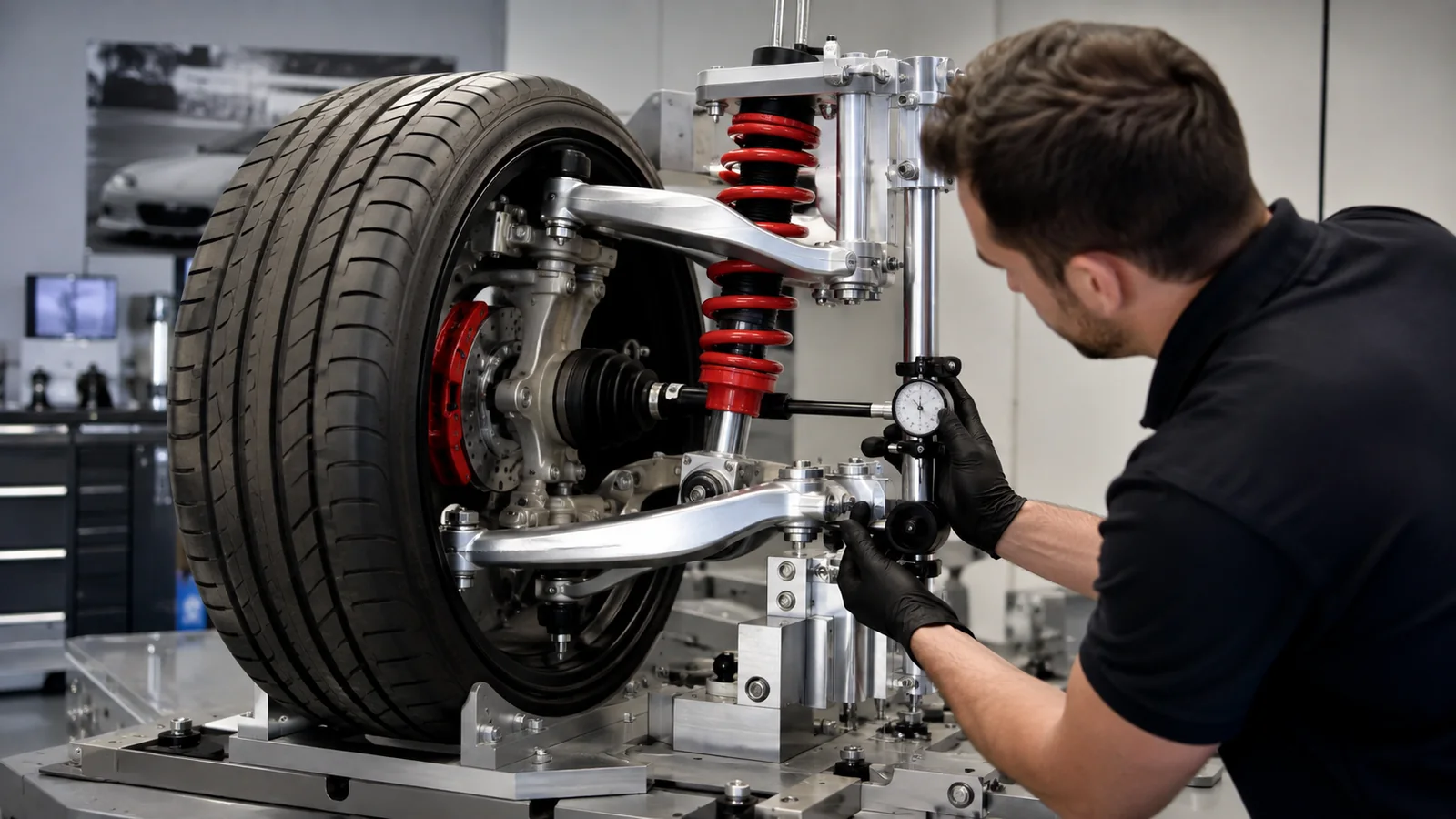
For the aftermarket, this creates an opportunity to present fitment as a system rather than a list of isolated numbers. Wheels define stance and tire position; suspension defines ride height and movement. When the two are planned together, the final vehicle is more likely to achieve the intended appearance without ignoring clearance, drivability or component compatibility.
